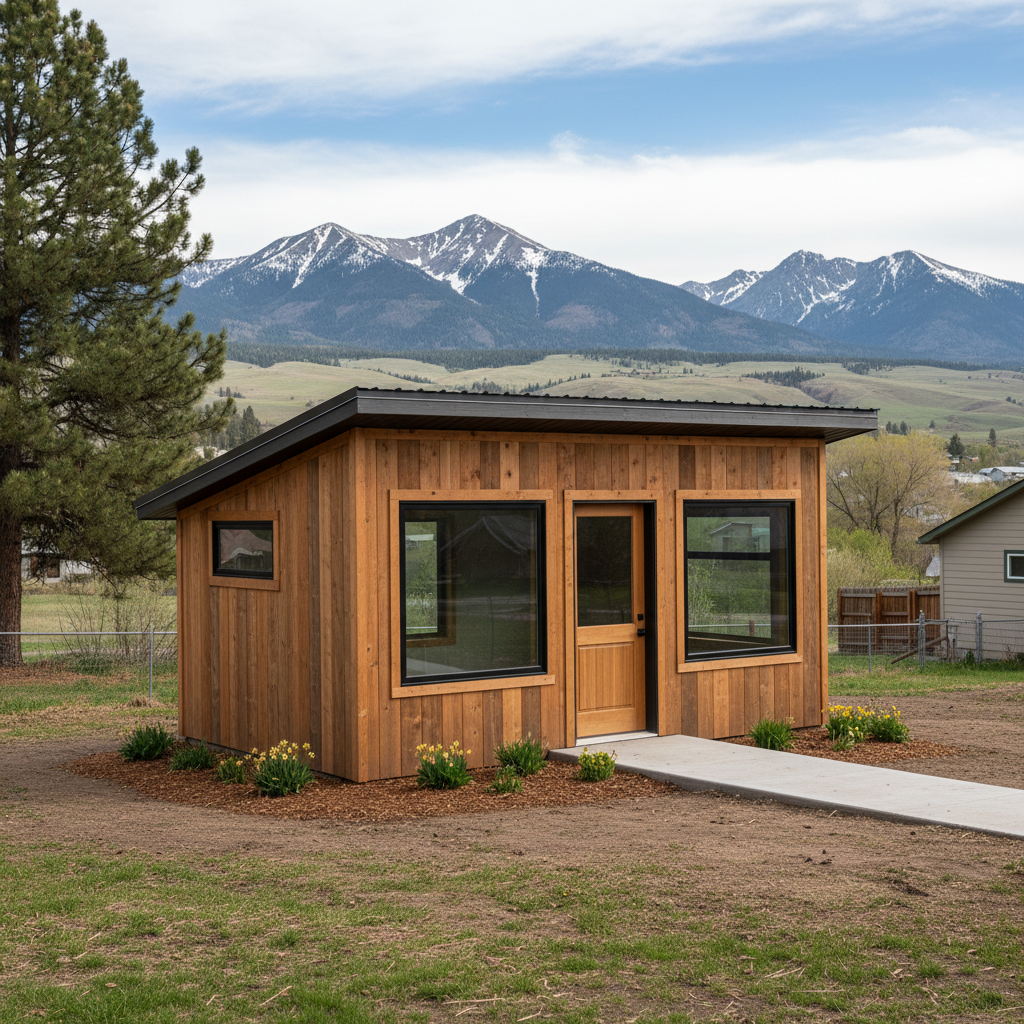
So, you're looking at putting an office shed on your property here in Victor. Smart move. More and more folks are working from home, and trying to focus with kids, pets, or just the general hustle and bustle of daily life inside your house can be a real challenge. A dedicated office shed gives you that quiet space, that separation you need to actually get work done.
But what's it going to cost you? That's the big question, right? You don't want to get sticker shock, and you definitely don't want to overpay for something that won't last. I've built enough of these around the Bitterroot Valley to give you a pretty good idea of what to expect.
What Drives the Price Tag?
A few key things really push the price up or down on an office shed. It's not just a box, after all.
- Size: This is probably the most obvious. A 10x12 shed is going to be a lot cheaper than a 12x20. Most people find that a 10x12 or 10x16 gives them enough room for a desk, a filing cabinet, and maybe a small sitting area. If you're planning on meeting clients out there, you'll need more space.
- Foundation: Are we just putting it on gravel and concrete blocks, or do you want a full concrete slab? A slab is more expensive upfront, usually adding $1,500-$3,000 for a typical office shed size, but it's more permanent and can be better for insulation. Here in Victor, with our often-rocky soil, digging for a perimeter foundation can sometimes add unexpected costs if we hit a lot of bedrock.
- Insulation & Interior Finish: This is where an office shed really differs from a storage shed. You're going to want insulation in the walls, floor, and ceiling, especially with our cold Montana winters and hot summers. Then you've got drywall, paint, flooring (laminate, vinyl plank, or carpet tiles are common), and trim. These interior finishes can easily add $5,000-$10,000+ depending on the quality you choose.
- Electrical: You'll need power for lights, your computer, heater, and maybe AC. Running a trench from your main panel to the shed, installing a sub-panel, outlets, switches, and lighting fixtures isn't cheap. Expect to pay anywhere from $2,000 to $5,000 for a basic electrical setup, depending on the distance and complexity.
- HVAC: Are you going with a simple electric space heater and a window AC unit? Or do you want a mini-split heat pump system? A mini-split is a fantastic option for year-round comfort and efficiency, but it'll add $3,000-$6,000 to your total.
- Windows & Doors: Standard single-pane windows are cheaper, but you'll lose a lot of heat. Double-pane, low-E windows are definitely worth the investment for an office. Same goes for your door – a solid, insulated entry door is essential.
- Exterior Finishes: Siding, roofing, and trim. You can go with basic T1-11 siding and asphalt shingles, or step it up to LP SmartSide, cedar siding, or a metal roof. These choices impact both cost and longevity.
Typical Cost Ranges in Victor
Alright, let's talk numbers. For a fully finished, insulated, and electrified office shed here in Victor, you're generally looking at:
- Basic (10x12 to 10x16): This would include decent insulation, basic drywall, laminate flooring, a few outlets, LED lighting, and maybe a small electric heater. You're probably in the $15,000 - $25,000 range. This is a functional, comfortable space, but not fancy.
- Mid-Range (10x16 to 12x20): Here, you're getting better windows, a mini-split HVAC, nicer interior finishes, and possibly a small porch or upgraded siding. Expect to pay $25,000 - $40,000. This is where most folks land for a really solid, long-lasting office.
- High-End/Custom (12x20+): If you want custom cabinetry, high-end flooring, a full bathroom, or unique architectural features, the sky's the limit. You could easily spend $40,000+. At this point, you're building a small accessory dwelling unit (ADU), which brings in different permitting requirements too.
These figures generally include materials and labor for construction, but might not always include things like extensive site prep or specific utility trenching if it's a long run.
What Should a Quote Include?
When you get a quote from Bitterroot Valley Custom Sheds, or anyone else, make sure it's detailed. You want to see:
- Detailed breakdown of materials: What kind of siding? What R-value insulation? Specific window types?
- Labor costs: Clearly separated from materials.
- Foundation type: Is it blocks, gravel, or a concrete slab?
- Electrical plan: Number of outlets, lights, type of panel.
- HVAC solution: Specific model of mini-split or type of heater.
- Interior finishes: Flooring, paint, trim details.
- Permitting fees: Who handles this, and is it included? In Ravalli County, structures over 200 sq ft generally require a building permit, and anything with plumbing or extensive electrical will definitely need one.
- Site preparation: Grading, gravel, etc.
- Warranty information: What's covered and for how long?
How to Avoid Overpaying
It's easy to get caught up, but here's how you stay smart:
- Get multiple quotes: Don't just go with the first guy. Three quotes is a good number to compare.
- Compare apples to apples: Make sure each quote includes the same level of finish and features. A cheap quote might be missing crucial elements.
- Ask for references: Talk to past clients. See their work.
- Don't skimp on the foundation or insulation: These are hard to upgrade later and are critical for the longevity and comfort of your shed.
- Understand the contract: Read every word. Ask questions if something isn't clear.
- Consider DIY for some elements: If you're handy, maybe you can do the interior painting or install the flooring yourself to save a few bucks. Just be realistic about your skills and time.
An office shed is a big investment, but it's one that can really improve your work-life balance and even add value to your property. Do your homework, ask the right questions, and you'll end up with a space you love.